
By Cédric Garrofé
How could a chaos of dust and toxic gases give rise to a living world? Long relegated to the realm of philosophy, this universal enigma is now the focus of an unprecedented scientific collaboration in Switzerland.
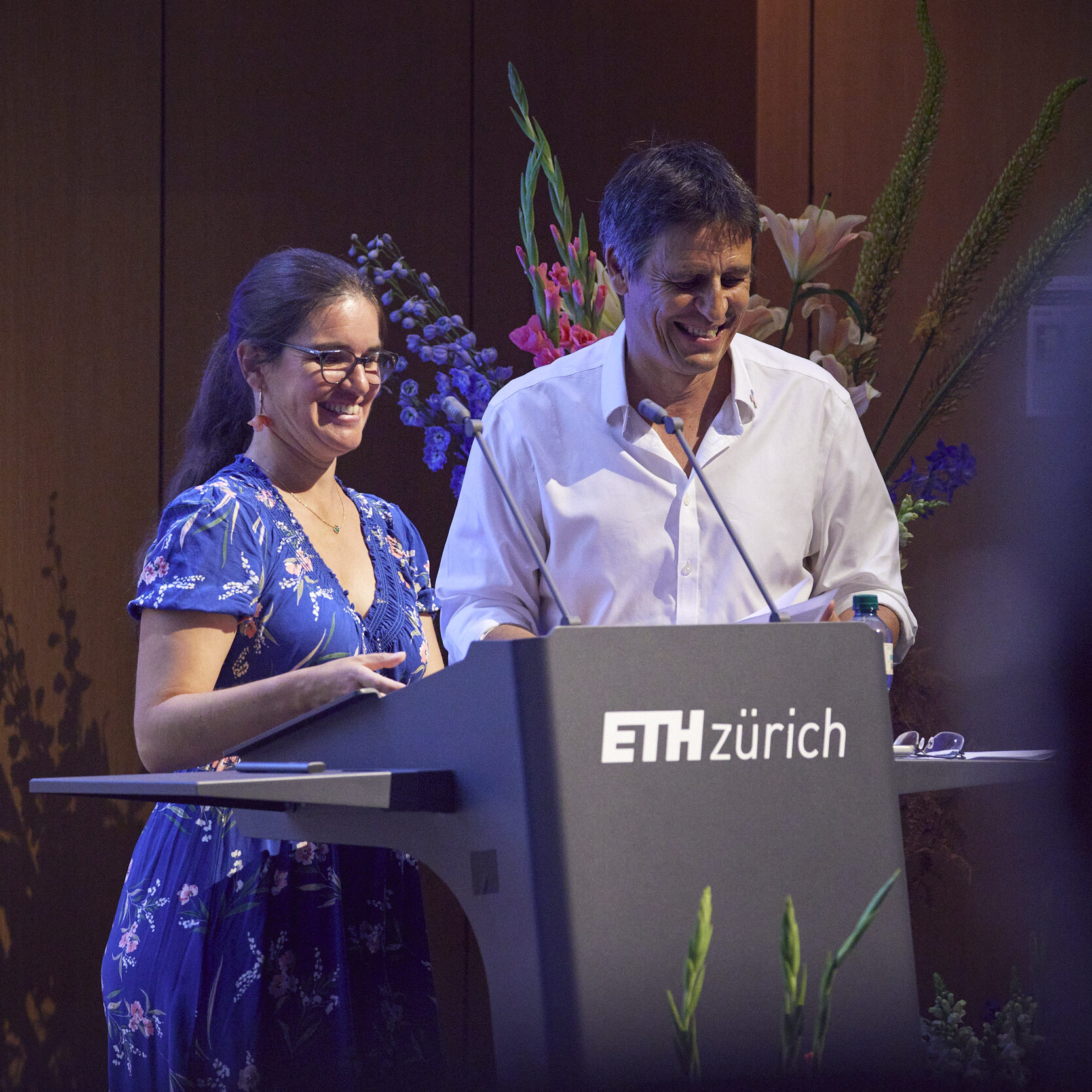
Gathered at ETH Zurich this Monday, June 22, 2026, for the official launch of the National Centre of Competence in Research (NCCR) “Genesis,” the country’s leading experts confirmed one certainty: to unlock the mystery of our origins and hunt for extraterrestrial life, science must break down its own boundaries.
“Today, we celebrate the beginning of an adventure that tackles a question as old as science itself,” summarized Professor Günther Dissertori, Rector of ETH Zurich.
This enthusiasm is shared by Frédéric Herman, Rector of Unil, for whom the launch of the NCCR Genesis hub is the culmination of a strategic gamble initiated a decade ago: “This success is the product of patience, commitment, and trust in the transformative power of fundamental research.”
Behind this project lies a powerful academic alliance between the University of Lausanne and ETH Zurich, co-directed by both institutions and supported by the Swiss National Science Foundation (SNSF).
This collaboration carves out a major scientific axis across the entire country, involving no fewer than 23 research projects and flagship institutions such as the universities of Geneva, Bern, and Fribourg, the Paul Scherrer Institute (PSI), EPFL, and SUPSI.
>> Click here to watch the full event
Interdisciplinarity as a Compass
For nearly a century, scientific disciplines advanced in silos: astronomers hunted for exoplanets, geologists probed terrestrial rocks, and biologists dissected the mechanisms of living organisms.
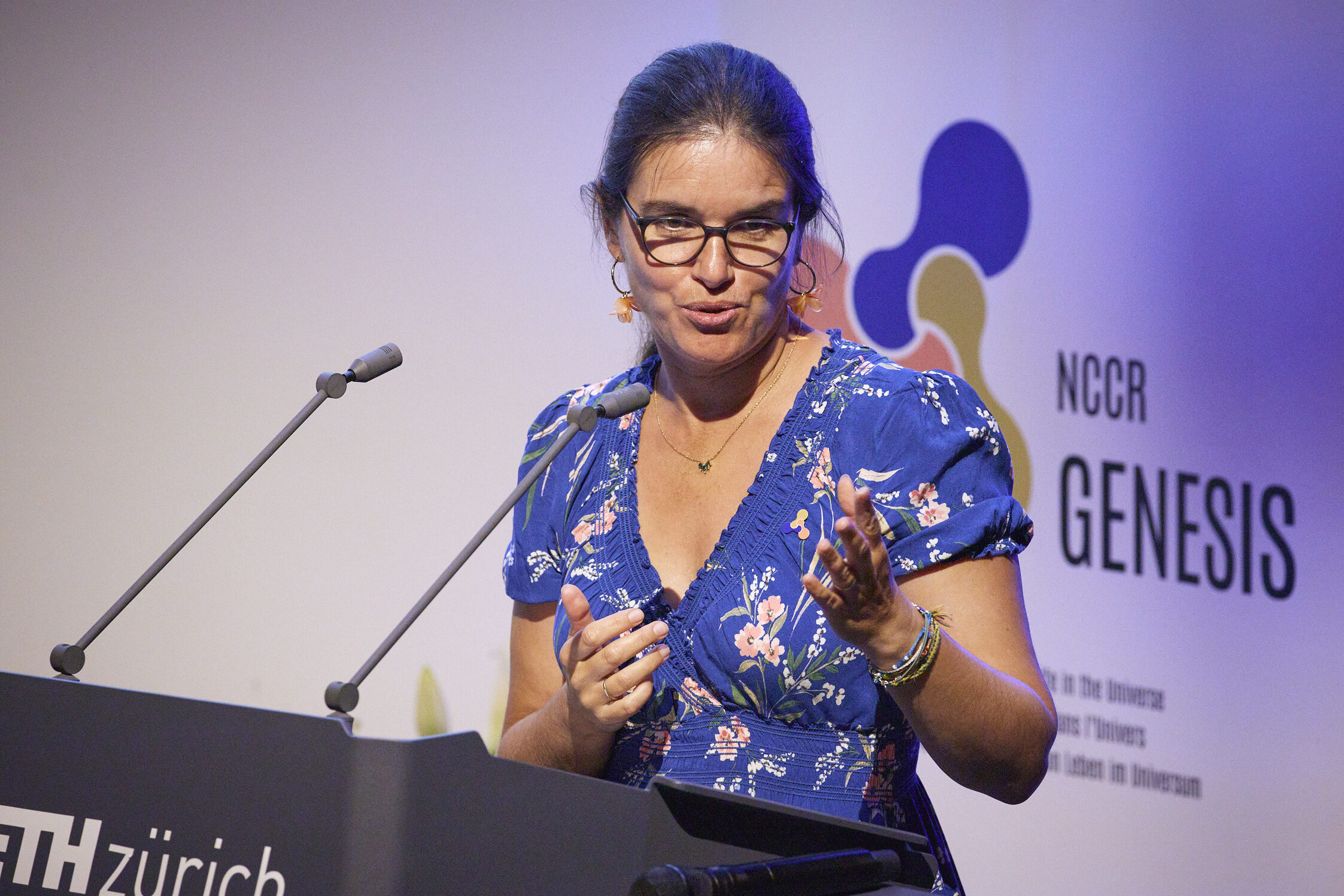
“This is precisely why NCCR Genesis exists: to build bridges between fields that, until now, only worked side by side,” explains Professor Johanna Marin-Carbonne, a geologist at Unil (FGSE) and co-director of the centre. “No single discipline can solve the mystery of life’s emergence on its own. As the famous proverb goes: If you want to go fast, go alone; if you want to go far, go together.”
Kilian Kessler / ETH
The strength of this programme lies in an unprecedented global approach dubbed “planetary biology.” It is no longer about conceiving life as an isolated accident in a Petri dish, but as a global phenomenon, inseparable from the evolution of its environment. A wild project? Undoubtedly. Johanna Marin-Carbonne herself is amused by it: “When I talked about the project to my colleagues at Unil, I told them: ‘It’s a completely crazy idea from ETH Zurich, but I think we absolutely have to be a part of it!’ Today, here we are.”
Behind this scientific machine, which brings together 23 principal investigators across Switzerland (ETH Zurich, University of Lausanne, University of Bern, Università della Svizzera italiana, Paul Scherrer Institue, University of Geneva, EPFL, University of Fribourg and University of Applied Sciences and Arts of Southern Switzerland), the 2019 Nobel Prize in Physics, Didier Queloz, co-director of the centre, brings a crucial cosmological and technological dimension to this alliance:
“We are living in an extraordinary moment in the history of science. Since the discovery of the first exoplanet, we have realised the infinite diversity of the worlds around us. But to understand if life is possible there, pure astrophysics is no longer enough. Genesis embodies this shift: we must link a planet’s trajectory – its chemistry, its geology, its atmosphere – to the very emergence of biological mechanisms. Life is not an isolated miracle; it is a planetary process.”
Kilian Kessler / ETH
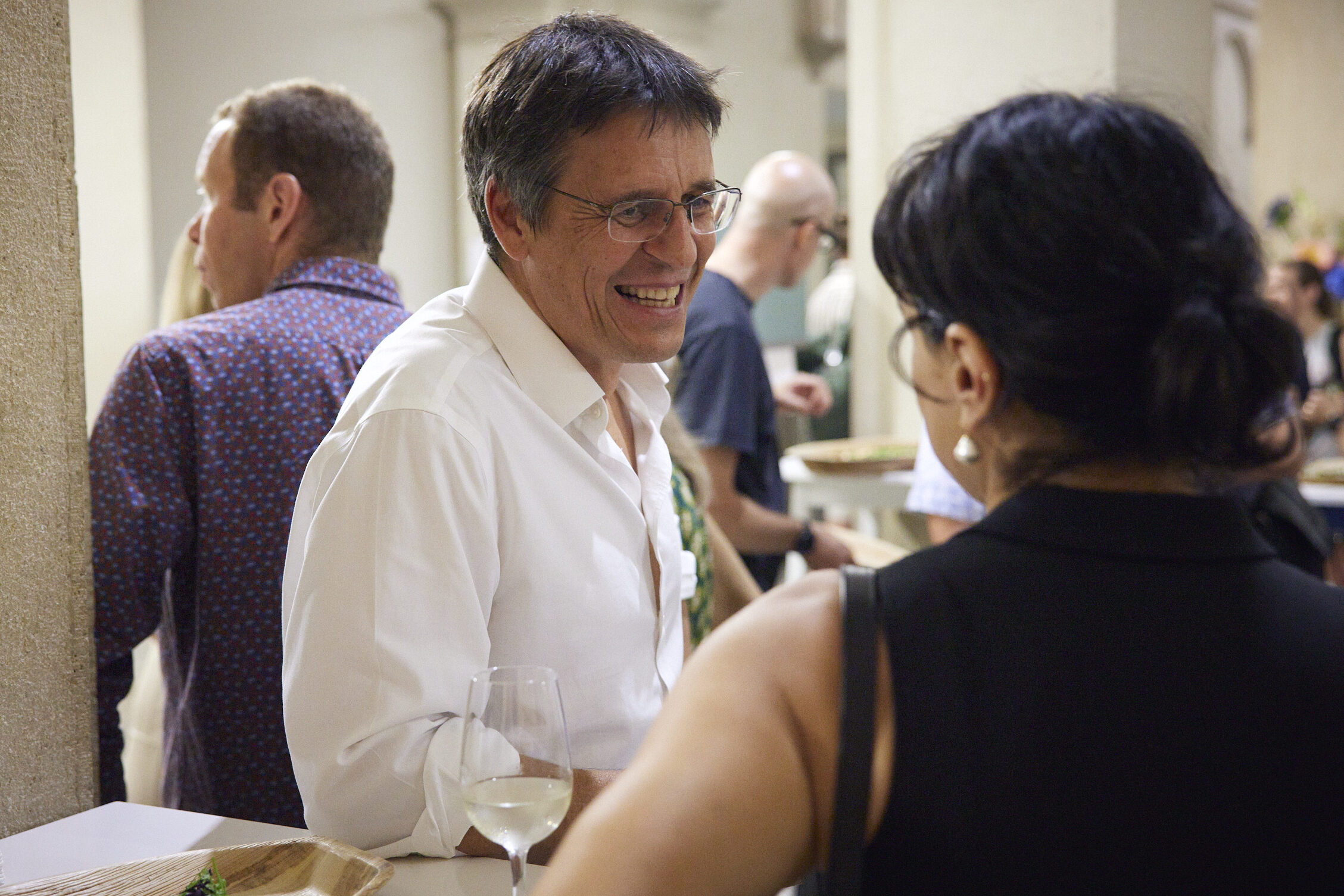
This shared leadership and long-term vision are praised by the Lausanne-based researcher Johanna Marin-Carbonne: “Didier brought us together with a unique vision, and I have enjoyed every step of the way. Above all, this adventure reminds us of our collective dimension.” It is a mutual connection, as Didier Queloz readily confides that his colleague’s enthusiasm was the primary driver in turning this ambition into reality: “You made me love Genesis,” he says to Johanna.
The hub’s ambition extends far beyond laboratories. The programme aims to train a new generation of open-minded scientists (16 postdocs and 28 PhD students in the very first year) capable of speaking the languages of geology, astronomy, chemistry, and molecular biology alike. Ultimately, these experts will be equipped to spread their knowledge well beyond academia: into society, industry, and politics.
Resurrecting Extinct Proteins and Modelling Worlds
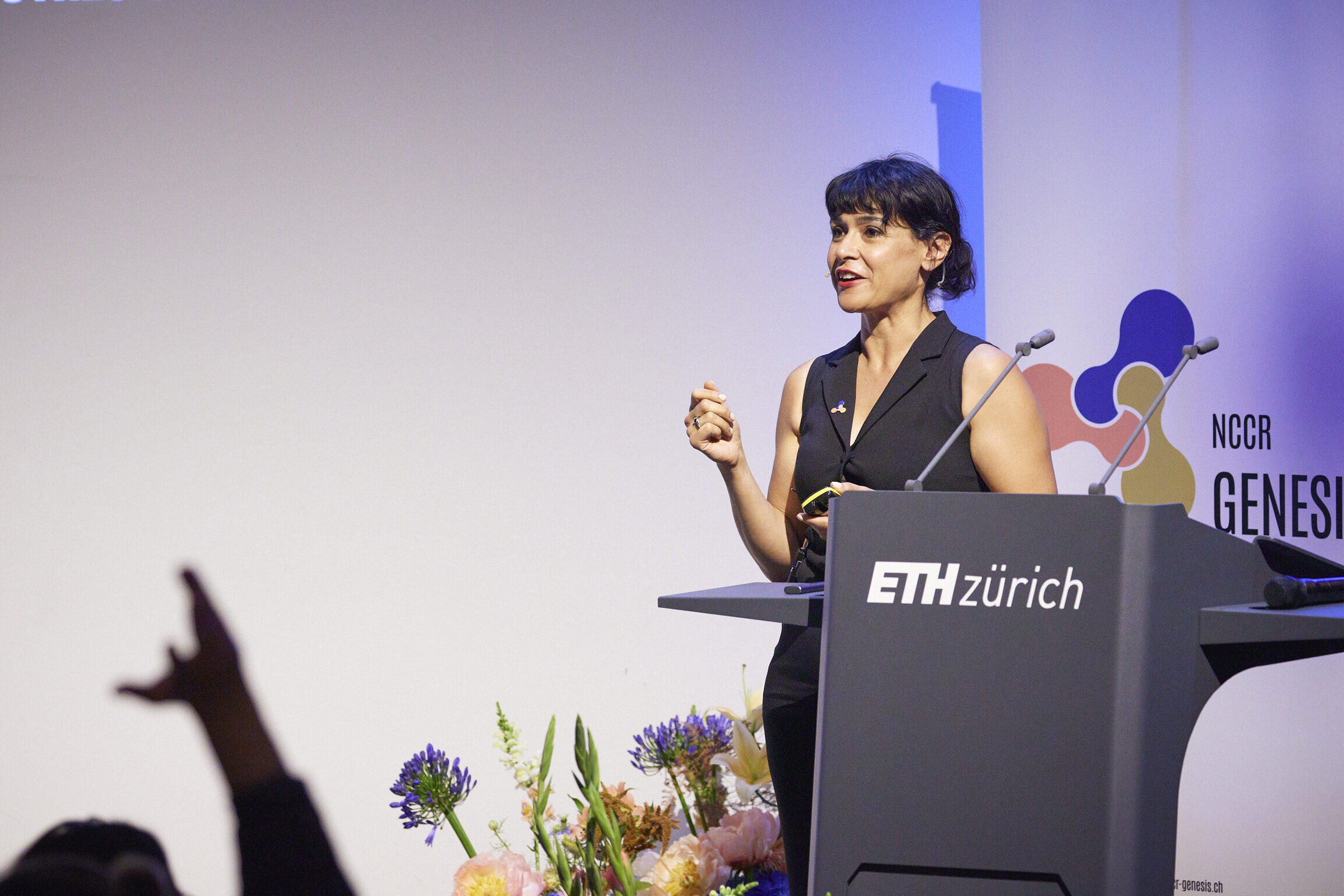
The guest of honor at the event, Professor Betül Kaçar (University of Wisconsin-Madison), a leading figure in global astrobiology, captivated the audience by detailing the methods of synthetic biology. Since time travel is impossible, her laboratories use phylogenetics to “recreate” the genetic code of 3.5-billion-year-old proteins and reintroduce them into modern microbes to observe their behaviour.
Her work demonstrates that primitive life on Earth had already developed highly complex mechanisms, utilizing rare metals (such as molybdenum) to metabolise its energy. “The first cell is not the first life,” she reminds us, emphasizing that evolution began long before the appearance of the first autonomous cellular organism (LUCA).
Kilian Kessler / ETH
In the field of modelling, NCCR Genesis researchers are tackling the “Earth’s thermostat” – the complex cycle between the Earth’s interior, the oceans, and the atmosphere that has allowed liquid water to remain on the surface for billions of years, despite a Sun that was once 25% fainter.
Using 3D numerical simulations, the hub will attempt to determine whether exoplanets discovered in the Universe possess such a thermal regulator.
Beyond Earth: The Quest for Another Life
The most staggering facet of the project involves the search for extraterrestrial life. Science now possesses extraordinary tools, such as the James Webb Space Telescope.
Yet, the first transmission spectra analyzed from the famous temperate planet TRAPPIST-1e display a frustrating ambiguity: current data does not yet allow us to differentiate between a potentially habitable atmosphere and bare rock.
Faced with these technological limitations, the Swiss scientific community is banking on future direct-imaging concepts like the HWO (Habitable Worlds Observatory) project or the LIFE initiative, developed at ETH Zurich.
But before scanning the far reaches of the galaxy, eyes are turning towards our own solar system. Saturn’s icy moon, Enceladus – with its global ocean hidden beneath an ice crust and geysers spewing organic matter into space – stands out as the priority target. In fact, the European Space Agency (ESA) is considering sending a mission there by 2040.
The Memory of Matter
Inanimate matter possesses a fascinating property: eventually, it remembers. “Life is chemistry that remembers,” summarized researcher Betül Kaçar to a round of applause from the audience.
By launching NCCR Genesis, Switzerland has definitively given itself the means to read the very first pages of this universal memory.
This article was originally published on Unil.